He Meigui, Ren Mengfan, Zhang Jianmin, Liu Zhengkun, Zhao Jing, Jin Wanqin
2026, 93(5): 1-8.
Published(online):2026-07-06
Abstract
Full text
网络PDF
Abstract
Cross-linked poly(ethylene oxide) (PEO) is a prominent polymer material for CO2 capture, owing to its high density of ether groups and amorphous structure. However, the epoxy ring-opening polymerization reaction involved in synthesizing cross-linked PEO generates a significant number of hydroxyl groups, which promote the formation of interchain hydrogen bonds and increase resistance to gas permeation. In this study, we modified the molecular structure of cross-linked PEO by introducing mono-amino-terminated molecules into the reaction system of bis-epoxy-terminated and bis-amino-terminated PEO. This approach increases the proportion of highly mobile dangling chains within the cross-linked PEO network. Additionally, the methyl groups on the mono-amino-terminated molecules disrupt the formation of interchain hydrogen bonds, further enhancing polymer chain mobility. As a result, the free volume fraction of the membrane can be significantly increased, leading to simultaneous improvements in CO2 solubility and diffusivity. Consequently, the modified membrane achieves a CO2 permeability 2.25 times that of the pristine membrane. The membrane demonstrates stable performance over a 280-h long-term test, exhibiting a CO2 permeability of approximately 415 Barrer (1 Barrer =3.35×10⁻¹⁶ mol·(m·s·Pa)-1) and a CO2/N2 selectivity of around 34 for CO2/N2 mixed gas separation.
Zhong Lifan, Lv Xianchao, Ling Zhenyang, Weerawut Chaiwat, Liu Shasha, Zhang Shu, Lu Xingjie, Miftahul Huda, Huang Yong, Cao Jing-Pei
2026, 93(5): 9-16.
Published(online):2026-07-06
Abstract
Full text
网络PDF
Abstract
The complex composition of bio-oil necessitates advanced separation strategies for its valorization. This work reports the application of biochar as a sustainable and structure-tunable stationary phase in column chromatography for the efficient fractionation of bio-oil. Biochars with distinctly different properties were engineered through pyrolysis of bamboo at 400℃ (bsC-400) and 700 ◦C (bsC-700). Comprehensive characterization confirmed that bsC-700 possessed a highly aromatized and hydro-phobic surface with a well-developed porous network, while bsC-400 retained a polar and oxygen-functionalized surface. Their chromatographic performance revealed a fundamental structure-function relationship, as evidenced by the strong retention of sugars on the polar surface of bsC-400 via hydrogen-bonding interactions, which necessitated the use of aggressive solvents for elution. In contrast, bsC-700 exhibited exceptional affinity for phenolics viaπ-π stacking, while facilitating the early and efficient elution of sugars with moderately polar solvents due to its non-polar chemistry. This study establishes pyrolysis temperature as a critical design parameter for tailoring biochar selectivity, positioning it as a versatile stationary phase for targeting specific compound families within complex mixtures and advancing integrated biorefinery concepts.
Dong Yaqian, Yue Shuyu, Wang Kai, Li Taotao, Ma Tiehua, Guo Dong, Wu Yuxiang, Wu Zhibo, Zhang Yaohui, Liang Junfei
2026, 93(5): 17-29.
Published(online):2026-07-06
Abstract
Full text
网络PDF
Abstract
The sluggish kinetics of the oxygen reduction reaction (ORR) pose a critical bottleneck in the energy conversion efficiency of fuel cells and metal-air batteries. Developing non-precious metal catalysts with pH-universal adaptability and high cost-effectiveness is an urgent need in the field. In this study, we introduce an innovative biomass pyrolysis-driven nano-confinement strategy. Expired milk powder and g-C3N4 are utilized as dual-function carbon sources to successfully construct a composite structure of nitrogen-doped carbon nanotubes (NCNTs) encapsulating FeCo alloy nanoparticles (FeCo@NCNT). During high-temperature pyrolysis, the decomposition products of milk powder deposit onto the molten FeCo particles, forming carbon nanotubes, while the decomposition of g-C3N4 provides nitrogen doping and induces periodic distortions in the carbon lattice, resulting in nanoconfined morphology of FeCo@NCNT. This structure formed by N-doped carbon nanotubes encapsulating FeCo alloy enables the catalyst to achieve half-wave potentials of 0.83, 0.71, and 0.60 V in 0.1 mol·L-1 KOH, 0.5 mol·L-1·H2SO4, and 0.1 mol·L-1 PBS electrolytes, respectively. The assembled zinc-air battery exhibits an open-circuit voltage of 1.51 V and a peak power density of 169 mW·cm-2. This approach provides a new paradigm for biomass waste resource utilization and the design of energy catalysts for pH-universal applications.
Bao Yuyun, Li Xinyu, Cai Ziqi, Gao Zhengming, J.J. Derksen
2026, 93(5): 30-42.
Published(online):2026-07-06
Abstract
Full text
网络PDF
Abstract
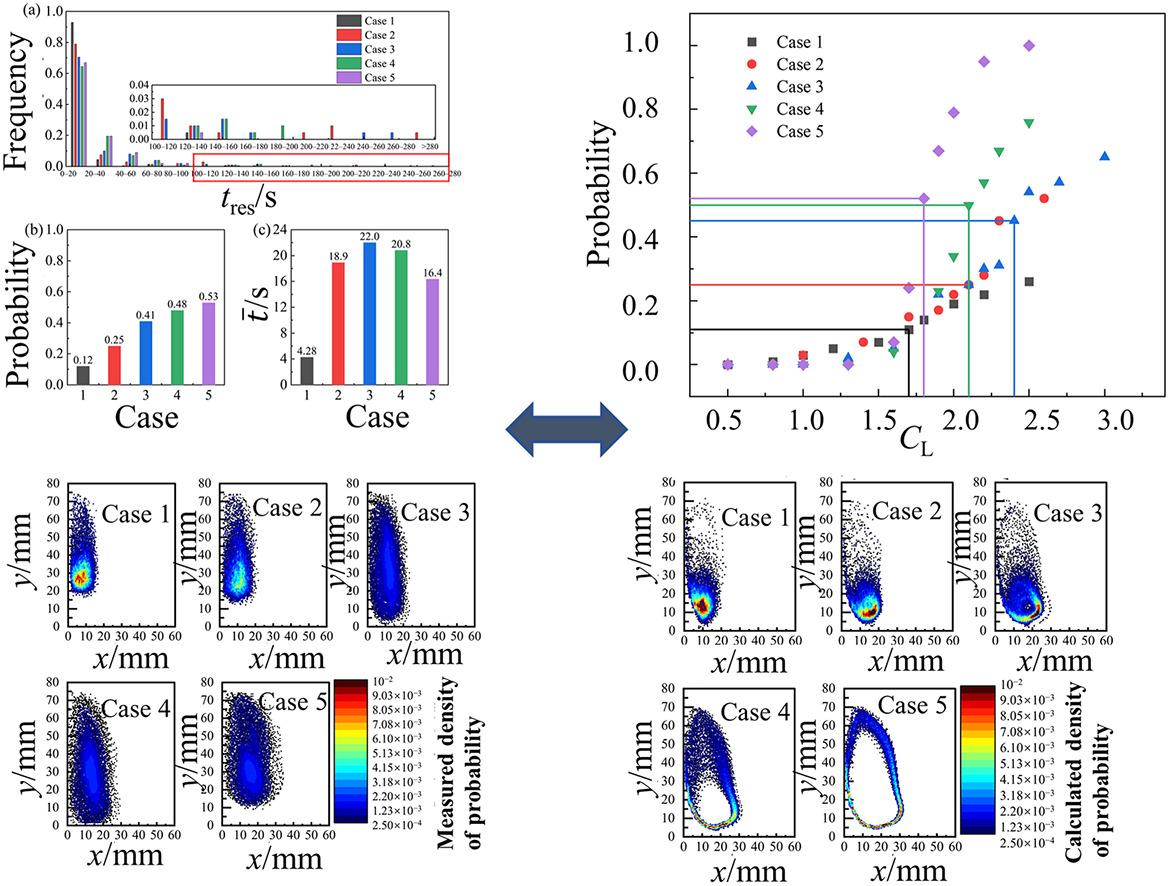
Gas-liquid two-phase flow is a common phenomenon in both nature and industry processes. Predicting the behavioral trajectory of bubbles in complex flow fields is an aspect of gas-liquid flow, for which the analysis and understanding of the forces acting on the bubbles are necessary. This study investigates the motion of single bubbles about 2 mm in the recirculating flow in a quasi-two-dimensional cavity. The measured bubble trajectories and residence times are used to design a force-balance model of the bubble behavior. In the model, we track the bubble through a single-phase flow field, including the turbulent fluctuations and their time scales. Key items of the model are the drag force and lift force on the bubble. We introduce the effective lift coefficient, which represents the combined effects of bubble deformation, turbulence and wall shear. By tuning the drag and more importantly, the lift coefficient we achieve agreement between experimental and modeled bubble behaviors. Therefore, we are able to quantify the relative importance of the forces acting on the bubble and offer an empirical framework for modeling deformable bubble dynamics in multiphase systems.
Yang Yue, Hu Qixu, Zhao Xiaojie, Li Ganlu, Li Hui, Chen Kequan
2026, 93(5): 43-64.
Published(online):2026-07-06
Abstract
Full text
网络PDF
Abstract
Isocyanates are important products in the polyurethane industry. The industrial production of isocyanates is currently entirely based on the phosgene process. However, phosgene is extremely toxic and generates highly corrosive hydrochloric acid byproduct. Also, chlorine-containing impurities in the product are difficult to remove, which can reduce the reactivity of isocyanates. To protect the environment and human health, the development of non-phosgene synthesis processes for isocyanates is of great significance. This review provides an overview of all reported non-phosgene processes for synthesizing isocyanates, which are divided into one- and two-step pathways. The one-step pathways include the direct carbonylation of nitro and amino groups and the Curtius, Hofmann, and Lossen rearrangements. The two-step pathway involves the thermal decomposition of carbamates: first forming carbamates with amino or nitro groups by using CO, CO2, dimethyl carbonate, urea, and alkyl carbamates as the carbonyl source, and then under the action of catalysts and solvents, the carbamates are thermally cracked to generate the corresponding isocyanates. This article focuses on the synthesis processes and mechanisms of various non-phosgene methods, as well as current research progress. Future prospects for the non-phosgene synthesis of isocyanates are also discussed.
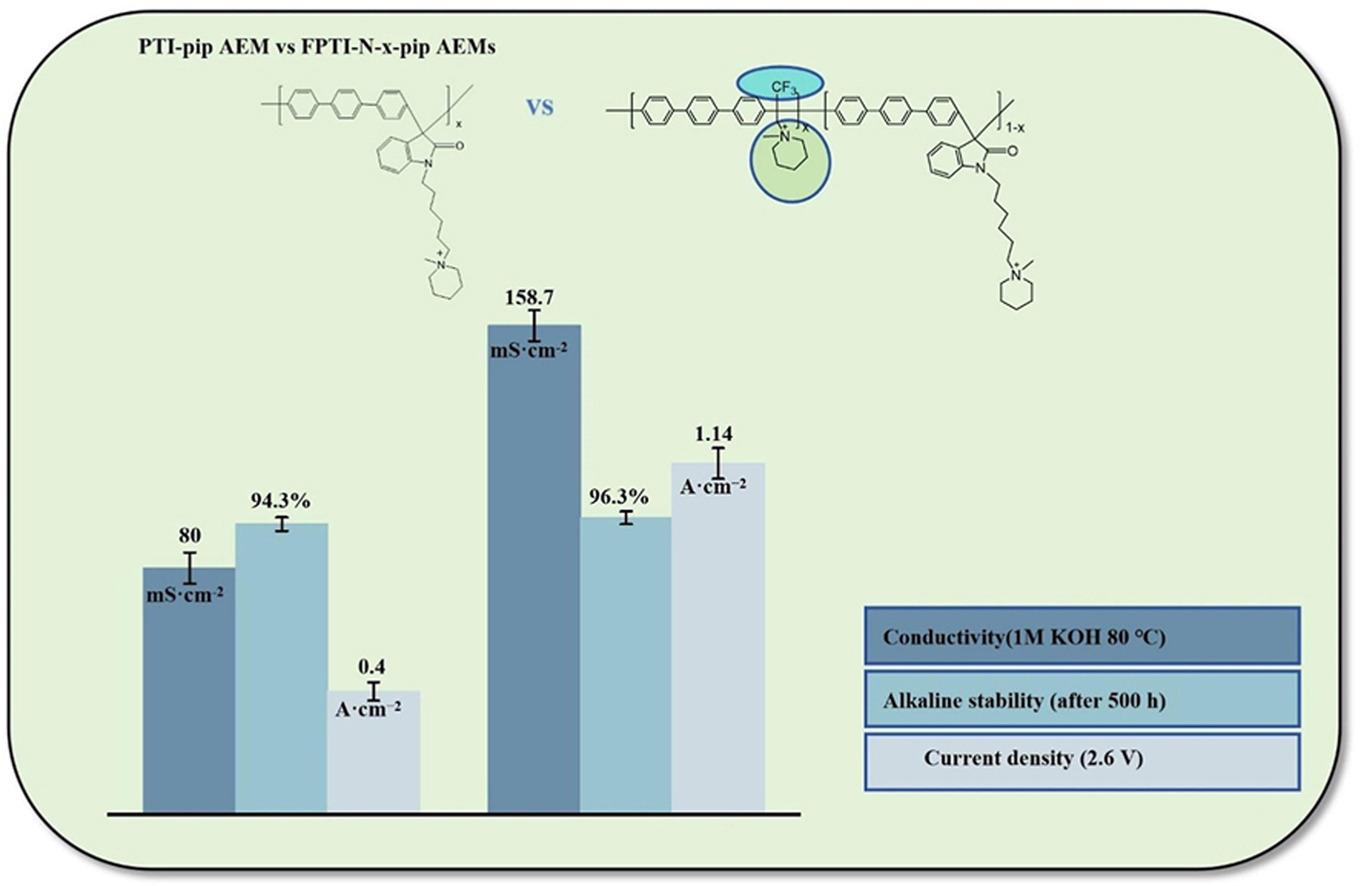
In recent years, anion exchange membrane water electrolysis (AEMWE) has garnered significant attention as an efficient technology for hydrogen production. However, anion exchange membranes (AEMs), which are fundamental components of AEMWE, continue to face challenges in achieving a balance between ionic conductivity and dimensional integrity. This study successfully synthesized a series of poly(p-terphenyl isatin)-based AEMs, featuring fluorinated main chains and long alkyl side chains (FPTI-N-x-pip), through superacid-catalyzed Friedel-Crafts alkylation, Menshutkin, and nucleophilic substitution reactions. A comparison was also made with poly(p-terphenyl isatin) AEMs containing non-fluorinated main chains (PTI-pip). The incorporation of hydrophobic fluorinated groups into the main chain, coupled with hydrophilic side chains, results in a distinct microphase-separated structure that enhances both ionic conductivity and dimensional stability. Furthermore, the dual-cation synergistic effect improves the membrane's resistance to alkaline conditions. At 80℃, FPTI-N-50-pip exhibited a maximum ionic conductivity of (158.7 ± 5) mS·cm-1, significantly surpassing that of PTI-pip, which lacks fluorinated groups (80 ± 5) mS·cm-1. Additionally, the intro-duction of hydrophobic fluorinated groups effectively reduced water uptake, yielding a swelling ratio of only 28.5% at 80 ◦C. After being exposed to 1 mol·L-1 KOH at 80 ◦C for 500 h, the membrane retained 96.3% of its initial conductivity, indicating excellent alkaline stability. Moreover, the AEMWE cell utilizing FPTI-N-50-pip achieved a current density of 1.14 A·cm-2 at 2.6 V and 60 ◦C. The char-acterization results suggest that the synthesized FPTI-N-x-pip membranes hold great potential for applications in AEMWE.
Wu Yu-Hua, Wang Jue, Ma Yu-Long, Liu Cai-Zhu, Zhu Li, Zhang Hui, Bai Hong-Cun
2026, 93(5): 78-93.
Published(online):2026-07-06
Abstract
Full text
网络PDF
Abstract
The efficient resource utilization of coal gasification fine residues (CGFRs) stands as a pivotal challenge in the realms of green energy, environmental sustainability, and circular economy. Despite the promise of transforming CGFRs into high-value porous materials like molecular sieves, practical hurdles such as precise microstructural control and interference from impurity metals have impeded progress. This study addresses these gaps by developing a novel methodology to synthesize Fe2O3/SBA-15 mesoporous materials directly from CGFRsvia an equal-volume impregnation strategy, and evaluates their efficacy in degrading phenolic contaminants in coal chemical wastewater. The hierarchical SBA-15 with micro-porous plugs, large specific surface areas (685-812 m2·g-1), and unimodal mesopores (about 3.90 nm) or bimodal mesopores (3.90 nm and 6.27-7.40 nm) can be controllably prepared with CGFR as raw material in this work. Iron components were leveraged to form catalytic Fe2O3 active sites within the SBA-15 framework, further achieving the utilization of endogenous iron impurities in CGFRs. The prepared Fe2O3/SBA-15 together with PS + H2O2 exhibited nearly degradation efficiency 100% at 200 min for phenol with initial concentration of 25-100 mg·L-1via a synergistic Fenton-like mechanism, attributed to the interplay between mesoporous diffusion channels and surface-bound iron species. This work not only establishes a scalable pathway for converting industrial solid waste into high-performance catalysts but also provides mechanistic insights into impurity-mediated material synthesis and environmental remediation, bridging the gap between waste management and sustainable wastewater treatment technologies.
This study investigated the electrostatic spray modes and characteristics of ethanol/n-butanol blended fuelsE20, E40, E60, and E80. The effects of electrode spacing, ethanol blending ratio, fuel flow rate, and nozzle diameter on the electrostatic spray performance were examined. The research results indicate that within the voltage range of 0-15 kV, ethanol exhibits electrostatic spray phenomena such as droplet, pulsed jet, cone-jet and multiple-jet in sequence, whereas n-butanol shows significantly poor electrostatic spray performance. With the increase in the ethanol/n-butanol blending ratio, the spray mode remains unchanged, but the critical voltage for each mode decreases. As the electrode spacing increases, the spray performance deteriorates. Within the voltage range of 7-8 kV, E20, E40, E60, and E80 exhibit a stable cone-jet mode. Additionally, as the ethanol blending ratio increases, both the spray cone angle and spray area increase. When the fuel flow rate increases from 0.1 to 0.3 ml·min-1, the electrostatic spray cone angle and spray area also increase. However, beyond 0.3 ml·min-1, no further increase is observed. When the nozzle diameter decreases from 1.05 mm to 0.50 mm, there is no significant change in the electrostatic spray cone angle or spray area.
Yang Zhongshu, Zhou Han, Cai Yubin, Jing Shan, Lan Wenjie, Li Shaowei
2026, 93(5): 102-117.
Published(online):2026-07-06
Abstract
Full text
网络PDF
Abstract
In this work, CFD-PBM simulations based on experimentally measured breakup and coalescence kernels were conducted to investigate the hydrodynamics of pulsed disc and doughnut columns (PDDCs) at both laboratory and industrial scales. Comparing with two other coalescence kernels (C&T model and L&S model), the directly measured kernel achieved superior accuracy, with prediction errors within ±10%, and was successfully applied to industrial-scale simulations. The simulation results for the industrial pulsed column with a diameter of 200 mm show that the droplet size decreases with increasing pulsation intensity but increases with higher phase ratio and total throughput. Within the investigated ranges of pulsation intensity (Af = 13.4-15 mm·s-1), phase ratio (1-4), and total throughput (200-300 L·dm-2·h-1), the Sauter mean diameter (d32) ranged from 0.69 to 0.84 mm. Meanwhile, the dispersed-phase holdup increased with pulsation intensity, phase ratio, and total throughput, and was found to vary within 0.15-0.25 under the studied operating conditions, which agreed well with experimental results. These findings establish a reliable simulation approach for predicting droplet coalescence behavior in PDDCs and provide valuable insights for the design, optimization, and scale-up of industrial liquid-liquid extraction processes.
Yu Yanjie, Zhao Jiayu, Cui Yaman, Sun Qing, He Ping, Zheng Xiangjun
2026, 93(5): 118-126.
Published(online):2026-07-06
Abstract
Full text
网络PDF
Abstract
Robust integration of free-standing electrodes with efficient mass transport structuring represents a cornerstone for flexible devices. Herein, this work employs facile dual-step electrodeposition-sulfurization on cotton-derived carbon substrate to develop a self-supporting electrode. The resulting open-pore CoS2 nanosheets on S-doped cotton-derived carbon fiber (CoS2-S-CCF) achieve Co- S- C interfacial bonding via in-situ sulfur-induced self-assembly/doping, synergistically enhancing mass/charge trans-fer. The CoS2-S-CCF thus delivers exceptional oxygen evolution reaction performance (overpotential:332 mV@10 mA·cm-2; Tafel slope: 65.1 mV·dec-1) and enhanced oxygen reduction reaction activity (half-wave potential: +0.18 V). When deployed in flexible zinc-air batteries, this self-supporting elec-trode delivers a peak power density of 33.3 mW·cm-2 and stable cycling exceeding 500 cycles, mark-edly outperforming slurry-based Pt/C + RuO2 counterparts failing within 400 cycles. Pivotal advantages include the CoS2-substrate open-pore network enabling enhanced mass transport beyond dopant effects, binder-free design eliminating interfacial loss, and Co- S- C bonding assuring conductivity retention under deformation. This work provides novel design principles for highly durable free-standing flexible electrodes with optimized mass transfer.
Ding Yanqi, Zhang Tao, Ren Xue, Wang Lingyun, Chen Qian, Song Hongbing, Xiao Meng, Huang Tingting
2026, 93(5): 127-138.
Published(online):2026-07-06
Abstract
Full text
网络PDF
Abstract
This article proposes an optimized strategy integrating bimetallic doping with interfacial wettability engineering to successfully fabricate a Ru-Co bimetallic-doped MoS2 catalyst vertically oriented on modified carbon cloth for efficient hydrogen evolution reaction. The treated carbon cloth not only enhances its surface hydrophilicity but also provides nucleation sites for the growth of RuCo-MoS2 nanosheets. Subsequently, the development of an oriented growth induction strategy enables the vertical alignment of bimetallic atom-doped MoS2 on modified carbon cloth. This vertically grown structure is conducive to exposing more active sites, shortening the proton transport path, reducing the charge transfer impedance. Moreover, this study employs a reductive bonding technique to precisely modulate the coordination environments and electron distributions of co-doped Co and Ru bimetallic atoms, as well as significantly improving the hydrogen evolution reaction kinetics. Therefore, the as-prepared RuCo-MoS2/MCC catalyst demonstrates excellent HER performance in acidic electrolyte, exhibiting a relatively low overpotential of 62 mV at 10 mA·cm-2 and a small Tafel slope of 48.2 mV·dec-1.
Sun Man, Xu Zhengtao, Li Senlin, Sun Qian, Pu Yuan, Wang Dan
2026, 93(5): 139-147.
Published(online):2026-07-06
Abstract
Full text
网络PDF
Abstract
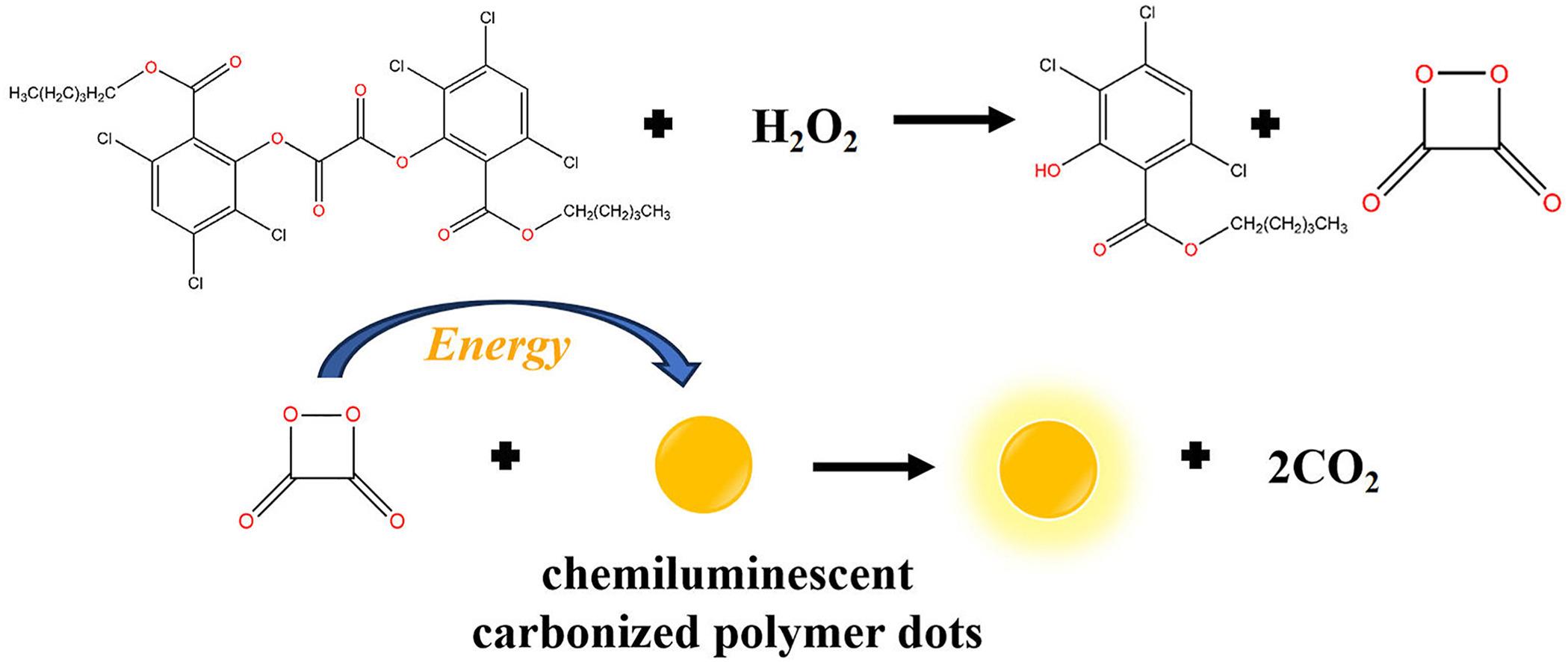
Chemiluminescence (CL), due to its high sensitivity and simplicity, has garnered much attention in various applications while there was a very limited choice of CL agents and effective systems. Herein, a new chemiluminescent reagent of nitrogen-doped carbonized polymer dots (N-CPDs) was synthesized by optimizing the reactions of citric acid and ethylenediamine under atmospheric conditions, which is simple, low-cost and easy for industrial production. The obtained N-CPDs have good water dispersibility, narrow size distribution and strong blue photoluminescence in the wavelength range 410-570 nm upon excitation of ultraviolet light, as well as significant CL in peroxyoxalate systems with yellowish green emission in the wavelength range 480-700 nm. Applications of N-CPDs as sensing agents for illumination and information encryption were demonstrated, revealing widely practical prospect.
Qiu Xutao, Zhao Feng, Ju Chen, Feng Yuancheng, Liu Chang, Liu Jinchao, Tan Aidong, Liu Jianguo
2026, 93(5): 148-159.
Published(online):2026-07-06
Abstract
Full text
网络PDF
Abstract
Proton exchange membrane water electrolysis (PEMWE) offers high efficiency for sustainable H2 production, but temperature effects on membrane electrode assembly (MEA) degradation remain poorly understood. In this work, we conducted comprehensive stability evaluations of MEAs under constant voltage operation at 1.80 V and temperatures of 40℃ (MEA-40), 60 ◦C (MEA-60), and 80 ◦C (MEA-80) to elucidate temperature-dependent degradation behaviors. Results reveal that degradation rates exhibit non-linear relationships with operating temperature, with MEA-40 demonstrating lowest degradation rates (1.48 mA·cm-2·g-1, normalized to H2 production) compared to accelerated degradation at higher temperatures. Polarization analysis indicates that temperature differentially affects activation, and ohmic losses, with MEA-80 showing the most pronounced impact across all polarization regions. Segmented degradation analysis shows reversible degradation (>80%) and porous transport layers (PTL) oxidation dominate initial decline, while Ti ion poisoning and progressive PTL oxidation control subsequent degradation, evidenced by focused ion beam - transmission electron microscopy, inductively coupled plasma analysis, and contact resistance measurements. An Arrhenius kinetics model was established, with model-derived trends showing good agreement with experimental non-linear accelerated degradation behavior. This work provides temperature-dependent MEA accelerated degradation mechanisms and offers guidance for optimizing PEMWE operating temperatures to enhance stability.
Li Zongying, Su Zihao, Song Hongyan, Li Chunxi, Meng Hong, Lu Yingzhou
2026, 93(5): 160-168.
Published(online):2026-07-06
Abstract
Full text
网络PDF
Abstract
Boron-nitrogen co-doped carbon materials (BNCMs) have demonstrated remarkable potential applications in energy storage, catalysis, and adsorption owing to their unique structure and dual acidic and basic sites, and their efficient preparation is highly demanding. Here, we proposed a facile preparation method of BNCM by ball milling calcium carbide (CaC2), BCl3 and cyanuric chloride (C3N3Cl3) at ambient temperature. The structure and composition of the BNCMs were characterized by Fourier transform infrared spectroscopy, X-ray photoelectron spectroscopy, Raman spectra, transmission electron microscope, etc., and their adsorption performance for Congo red (CR) and methylene blue was investigated. The results show that BNCMs are nanosized mesoporous carbon materials with surface area of 385.3 m2·g-1 and C, N and B-content of 74.6%, 6.6% and 2.4% respectively for BNCM-3. Furthermore, the contents of B and N can be regulated by the ratio of BCl3 and cyanuric chloride to calcium carbide. BNCM-3 shows excellent adsorption performance for CR, with adsorptivity of 606 mg·g-1 at 2.1 μg·g-1 equilibrium concentration, making it suitable for the deep treatment of dye wastewater. Compared to Langmuir model, the Freundlich model can better describe the isothermal adsorption behavior. The removal rate of CR still remained 94.4% after 5 recycles. This study provides a green method for preparing boron-nitrogen co-doped carbon materials under mild conditions, which is of reference significance for the synthesis of other doped carbon materials.
Han Rui, Guan Qingshan, Gu Leqi, Sun Xiaoyan, Tophet Wongladprom, Vissanu Meeyoo, Jengshiun Lim, Xia Li, Xiang Shuguang
2026, 93(5): 169-180.
Published(online):2026-07-06
Abstract
Full text
网络PDF
Abstract
The global pursuit of carbon neutrality demands innovative strategies to decarbonize energy-intensive sectors, among which energy-saving optimization represents one of the most critical measures. As one of the largest energy consumers in refineries, the Fluid Catalytic Cracking Unit (FCCU) offers significant potential for energy savings and carbon emission reduction. This study presents a comprehensive simulation-optimization framework for enhancing the performance of FCCU, integrating process simulation, thermodynamic analysis, and evolutionary optimization under industrial operational constraints. Genetic Algorithm (GA) and Non-dominated Sorting Genetic Algorithm-II (NSGA-II) were employed for multi-objective optimization of energy efficiency, product yield, and economic revenue. A TOPSIS decision-making method was incorporated to identify the most favorable trade-off solutions from the Pareto front. Dual-objective optimization achieved balanced trade-offs between conflicting objectives. Specifically, the energy-yield optimization reduced energy consumption by 3.28% and increased product yield by 1.95%, resulting in a 9.63% decrease in energy use compared to the single-objective yield maximization case. Similarly, the energy-revenue optimization reduced energy consumption by 1.17% and increased revenue by 0.25%, resulting in a 5.42% decrease in energy use compared to the single-objective revenue maximization case. Economic and environmental assess-ments confirm system-level decarbonization, with pollutant (CO2/SO2/NOx) emissions reduced by 2.30% (energy-yield) and 3.34% (energy-revenue), respectively. These results demonstrate the effectiveness of the proposed multi-objective framework and its potential as a transferable tool for performance enhancement and decarbonized, sustainable operation across FCCUs and broader refining systems.
Wen Wei, Meng Xiangyu, Liu Min, Du Xiaoqiang, Zhang Xiaoshuang
2026, 93(5): 181-191.
Published(online):2026-07-06
Abstract
Full text
网络PDF
Abstract
At present, the new energy industry is in full swing. Hydrogen energy has been widely studied because of its unique environmental advantages. Hydrogen evolution reaction(HER)by electrolysis of seawater, as one of the most advantageous methods for hydrogen production, has also aroused people's attention. Therefore, the Ni3S2/V3S4@NF-4F catalyst supported by foamed nickel was synthesized through a two-step hydrothermal reaction in this paper. The influence of the amount of fluorine added on the activity of the catalyst was researched. Experiments show that in 1.0 mol·L-1 KOH + seawater solution, Ni3S2/V3S4@NF-4F can obtain a current of 10 mA·cm-2 with the overpotential of 118 mV for HER reaction. At the same time, we also investigated the activity of the catalyst in urea solution. When reach the current density of 10 mA·cm-2, Ni3S2/V3S4@NF-4F need only overpotential of 121 mV for the HER process. Density functional theory (DFT) analysis presents that this V3S4 sample promotes the reaction rate of hydrogen and the Ni3S2 improves the conductivity of the sample, and the synergy between the two of them improves the hydrogen production performance of the Ni3S2/V3S4@NF-4F electrode. This paper presents novel ideas and insights for the exploration of efficient and environmentally friendly hydrogen-producing electrodes in different electrolytes.
Chen Yulong, Guo Tuo, Gong Xiaoting, Zhu Li, Jiang Jinyan, Ren Guangmin, Guo Qingjie
2026, 93(5): 192-202.
Published(online):2026-07-06
Abstract
Full text
网络PDF
Abstract
In this work, Ba/Na co-modified spinel iron-based catalysts (xNa/BaFe2O4) were developed for the hy-drogenation of CO2 to light olefins. The sodium loading was modulated via an impregnation-sol-gel method (x = 0.05, 0.06, 0.07). The 0.06Na/BaFe2O4 catalyst exhibited superior performance, achieving a CO2 conversion of 36.59%, a olefin selectivity of 42%, and a space-time yield(STY) of 11.85 mmol·g-1·h-1 (olefin to paraffin ratio,O/P =7.63). Moreover, the catalyst demonstrated stability during a 120-h activity test. This is primarily attributed to the presence of Ba as BaCO3, which elevated the dispersion of active Fe sites and fostered the development and stabilization of the Fe5C2 phase. The synergistic incorporation of Ba and Na increased the density of medium-strong basic sites and oxygen vacancies on the catalyst. These enhancements facilitated C—O bond dissociation and C—C coupling. This improved both CO2 conversion and selectivity toward light olefins. This work furnishes theoretical guidance and a practical basis toward designing bimetallic modified iron-based catalysts.
Xia Baoliang, Jiao Facun, Cheng Yi, Mao Lirui, Wang Jian, Li Hanxu
2026, 93(5): 203-214.
Published(online):2026-07-06
Abstract
Full text
网络PDF
Abstract
Si/Al-rich coal ash tends to generate refractory minerals during gasification, leading to elevated ash fusion temperatures (AFTs) and viscosity. This increases the risk of slagging in entrained-flow gasifiers. Previous studies have reported that the regulation mechanism of high-alumina coal (HAC) by low-AFT coal and transformation of corundum and mullite into eutectic are key factors in improving ash fusibility. However, coal ash has a complex composition, and other components of HAC may affect the melting transformation paths of minerals. In this study, high-purity corundum and mullite were introduced into ash, and the changes during the heating process of coal ash with minerals were investigated. The melting behaviour of two minerals and their impact on the melt structure at high temperature were examined to explain the effect of the two minerals on ash fusibility. The results indicate that increasing the corundum residue in the coal ash, leading to elevated AFTs. Variations in the corundum residue were closely related to the transformation paths of the two minerals during melting. Mullite decomposed into the planar laminar structure (Q3) of Si- O network structures during instan-taneous heating. The Q3 species migrated into the coal ash melt, increasing the Al concentration gradient between the liquid phase and corundum derived from mullite; by contrast, the added corundum developed a boundary layer upon corrosion by the molten phase, reducing the Al concen-tration gradient in solid-liquid phases and increasing the decomposition time of corundum. The interaction between the mineral and liquid phases in coal ash formed a corundum-containing suspension during the melting process, thereby increasing the AFT of ash. Therefore, promoting mullite formation instead of corundum in HAC helps lower AFT for gasification.
Rubidium (Rb) is indispensable in high-tech fields, efficient Rb extraction is of significant importance. In this study, an intermediate solution containing Rb+ and hexacyanoferrate(II) ion ([Fe(CN)6]4-) is used as the raw material. Efficient separation of Rb+ and the influence mechanism of [Fe(CN)6]4- on Rb+ extraction behavior are systematically explored via 4-tert-butyl-2-(α-methylbenzyl) phenol (t-BAMBP) solvent extraction, and a recycling strategy for [Fe(CN)6]4- is also established. The result shows that in the aqueous solution containing [Fe(CN)6]4-, the interaction between K+ and [Fe(CN)6]4- is stronger than that between Rb+ and the same anion. This difference further enhances the selectivity of t-BAMBP for Rb+ over K+, and it ultimately leads to a relatively high separation factor (Rb+/K+) of 34.95. It also shortens the contact time required for extracting Rb+ with t-BAMBP, and this contact time is 0.8 min. A process made up of 4-stage countercurrent extraction, 3-stage countercurrent washing, 2-stage countercurrent stripping and evaporation concentration makes it possible to obtain RbCl with a purity of 99.5%. In addition, [Fe(CN)6]4- is recyclable in the form of sodium hexacyanoferrate (Na4[Fe(CN)6]). Before and after the experiment, the Rb+/K+ concentration ratio increases markedly, rising from 7.09 to 2180.55. This achieves efficient separation between Rb+ and K+.
Gao Hongfeng, Han Rongrong, Liu Caizhu, Li Zhuangmei, Li Zihao, Wu Meng, Wu Yuhua, Wu Pengcheng, Wu Jianbo, Zhang Hui, Bai Hongcun
2026, 93(5): 223-235.
Published(online):2026-07-06
Abstract
Full text
网络PDF
Abstract
Coal-water interactions stand as a pivotal scientific issue within the realm of clean coal technology. The structural characteristics, energies, and the interactions between diverse functional groups in lignite and water molecules has remained elusive. The intricate interaction between lignite and water were explored by the multi-scale molecular simulation. Quantum chemical calculations were conducted to pinpoint the localized minimum configurations across various adsorption sites on lignite, as well as the corresponding stable adsorption configurations. Water molecules adsorb at different sites of lignite and form stable adsorption conformations through various hydrogen bonding mechanisms; this process plays a crucial role in the stability of the lignite-water composite system. The van der Waals forces and hydrogen bonds are the main type of the non-covalent interactions between lignite and water molecules. And the electrostatic interaction was the primary factor responsible for stabilizing the lignite-water interaction. The assembly behaviors and evolutionary traits of different quantities lignite molecules were revealed by the molecular dynamic simulation. Lignite molecular structures showed a certain level of aggregation in water, forming structures that cluster into coal particles. This provides a more profound and accurate understanding of the lignite-water interaction mechanism. By bridging microscopic interaction mechanisms with macroscopic industrial processes such as lignite drying or water-coal slurry, this work lays a foundation for efficient and clean utilization of lignite.
Liang Jin, Liu Shijie, Wang Haoliang, Li Xiangyang, Yang Chao
2026, 93(5): 236-253.
Published(online):2026-07-06
Abstract
Full text
网络PDF
Abstract
Large-scale bubble columns, such as Fischer-Tropsch synthesis in industrial processes, employ vertical tube bundles for heat removal while leaving the peripheral region (r/R ≥0.75) free for maintenance. This configuration induces hydrodynamic non-uniformity, as gas preferentially migrates towards the low-resistance peripheral region, leading to gas-liquid maldistribution and reduced reactor efficiency. To address this, this study proposes a novel internal intensification strategy integrating a draft tube with doughnut and disc-and-doughnut baffles. Systematic experiments are conducted under industrially relevant cross-sectional area (CSA) ratios of 12.6% to 25.1% and superficial gas velocities of 0.018-0.10 m·s-1. The results show that the draft tube alone enhances gas holdup by up to 20% at a CSA of 25.1%. Combining doughnut baffles with a draft tube at a CSA of 18.9% improves radial gas distribution and liquid surface uniformity at high superficial gas velocities. Increasing the baffle spacing to 500 mm reduces macromixing time by about 10 s. Incorporating disc-and-doughnut baffles with a draft tube further promotes liquid circulation and mass transfer efficiency by eliminating dead zones and sus-taining uniform radial gas distribution even at low velocities. These results provide experimental benchmarks for CFD model validation and offer scalable design principles for optimizing industrial bubble column reactors.
Sun Yi-Fei, Wang Ming-Long, Wang Ming, Chen Hong-Nan, Zhong Jin-Rong, Cui Jin-Long, Shi Ya-Bin, Rao Dan, Sun Chang-Yu, Chen Guang-Jin
2026, 93(5): 254-264.
Published(online):2026-07-06
Abstract
Full text
网络PDF
Abstract
Hydrate-based CO2 sequestration demonstrates promising potential for long-term carbon storage. However, considering that the hydrate stable zone is located in the shallow seabed, the adaptability and leakage risk of the formed CO2 hydrate-liquid CO2-seawater system need to be investigated. Therefore, we explore the CO2 leakage behavior from the CO2 hydrate-liquid CO2-seawater coexistence system in submarine sediments caused by external p-T changes. The processes of system expansion and phase change corresponding to different p-T evolutionary paths are analyzed, thereby revealing their impact mechanisms on CO2 leakage. The form of CO2 leakage depends on the phase equilibrium boundary crossed by its state evolution trajectory, and there are three types of phase transition processes: liquid CO2 gasification followed by hydrate decomposition into CO2 gas; hydrate decomposition into liquid CO2 followed by liquid CO2 gasification; hydrate decomposes directly into liquid CO2. The results show that severe CO2 leakage occurs after liquid CO2 vaporization, with an escape rate approaching 90%. When the reservoir pressure is sufficient to maintain liquid CO2, the escape rate resulting from hydrate decom-position induced by temperature increase is approximately 14%. Meanwhile, due to larger volume changes, higher hydrate saturation can actually lead to an increase in the CO2 leakage rate to 20%. Even so, CO2 sequestration density in the hydrate state is higher than in the liquid state, and hydrated CO2 sequestration can spontaneously mitigate changes in environmental temperature, representing a more stable sequestration form. This study provides new insights into the control of CO2 leakage for geologic CO2 sequestration.
Sun Meng, Ren Xiaotong, Mu Lin, Gao Jiajia, Wang Zhen, Shang Yan, Dong Ming, Wang Liang, Chen Jianbiao
2026, 93(5): 265-278.
Published(online):2026-07-06
Abstract
Full text
网络PDF
Abstract
This study investigates methane decomposition on NiFe2O4 and CaO-Ni3Fe catalysts via DFT and microdynamic modeling. The NiFe2O4 surface exhibits only weak physical adsorption of CH4, with a high activation energy of 1.87 eV for the first dehydrogenation step. Deep dehydrogenation to form CO requires overcoming an even higher activation barrier of 2.79 eV. In contrast, the CaO-Ni3Fe interface significantly reduces the activation energy for the first CH4 dehydrogenation step. Notably, a dual-path competition emerges at this interface: a carbon deposition pathway (CH3* → C*) and a CO formation pathway (CH3*→ CO). CaO promotes the oxidation of deposited carbon (C* + O → CO*) via active oxygen species, combined with interfacial electron modulation. Furthermore, CaO reduces the apparent activation energy for the CO formation pathway to 4.51 eV, thereby optimizing the selectivity towards CO generation. Regarding the dual-path reaction scenario, low-temperature reactivity is governed by carbon oxidation control, while the reaction shifts towards the conversion of the CH3*intermediate at elevated temperatures. This study elucidates the temperature-dependent mechanism of dual-path competition, providing a theoretical foundation for designing carbon-resistant methane reforming catalysts.
Guo Yan, Hou Tuanyuan, Wang Yongjin, Chang Liping, Wang Jiancheng, Liao Junjie
2026, 93(5): 279-292.
Published(online):2026-07-06
Abstract
Full text
网络PDF
Abstract
The removal of H2S from blast furnace gas (BFG) is significant for environmental protection and subsequent utilization. FAU zeolite is used widely for the H2S removal. However, carbonyl sulfide (COS) would be generated during the desulfurization for H2S in BFG. Herein, the desulfurization behavior and COS release performance over FAU zeolite and alkaline earth metal-modified zeolite sorbents were carried out using fixed bed desulfurization equipment. The COS generation pathway was studied using transient experiments andin-situ Fourier transform infrared spectrometry. The results show that CO and CO2 in BFG could lead to COS formation, with more COS generated in the presence of CO2 compared to CO. For the COS generation pathway, CO and CO2 are adsorbed over zeolite to form carboxylic species, which subsequently reacts with H2S to form thiocarbonates species, and further generating COS. The FAU zeolite sorbents modified with alkaline earth metals could inhibit COS generation. This study provides a theoretical support for inhibiting COS generation during the desulfurization for H2S over zeolites.
Jin Dongyu, Fang Hengbo, Qi Dagang, Tu Yuming, Zhou Zhiyong, Du Chencan, Ren Zhongqi
2026, 93(5): 293-305.
Published(online):2026-07-06
Abstract
Full text
网络PDF
Abstract
With the increasingly severe challenge of global carbon emissions, a mass concentration of 30% monoethanolamine aqueous solution is commonly used in industry to capture CO2. However, the inherent volatility of organic amines and the corrosive properties of aqueous amine solutions present significant challenges to achieving long-term operational stability and minimizing total costs in industrial-scale deployment. To address these issues, this study designed and developed a novel ternary non-aqueous phase change absorption system ([TEPAH][Pyr]/EG/NHD) based on the excellent thermal stability of ionic liquids (ILs). This system not only effectively solved the mass transfer issues caused by the high viscosity of pure IL, but also reduces the desorption processing volume by approximately 62% by utilizing phase-change absorption characteristics, significantly lowering regeneration costs. Through systematic optimization, the optimal formulation of the phase-change absorbent was determined to be an EG/NHD volume ratio of 5:5 with [TEPAH][Pyr] concentration of 0.5 mol·L-1. At 40℃, the system had a CO2 absorption capacity of 2.10 mol·mol-1, with the rich phase concentrating 95.9% of the absorbed CO2 while occupying only 38.1% of the total volume via spontaneous phase separation. Under simulated flue gas conditions (15%CO2+85% N2), the system maintained over 87% of the CO2 capture efficiency relative to pure CO2 environment, while demonstrating excellent cycling stability. Additionally, further research indicated that the system has low energy consumption and weak corrosivity, demonstrating significant potential for industrial-scale applications.
The influence of particle size on limestone decomposition in fluidized bed remains insufficiently understood, particularly for particles smaller than 150 μm, despite its importance in optimizing the calcination process. This study systematically compares the isothermal fluidized calcination behavior of <75 μm and 75-150 μm limestone particles to elucidate the coupled influences of fluidization behavior, decomposition kinetics, and reaction mechanisms on overall calcination performance. Fluidization experiments showed that finer particles (<75 μm) tended to agglomerate due to their high specific surface area, resulting in poor fluidization and unexpectedly slow decomposition. In contrast, coarser particles (75-150 μm) maintained stable fluidization and decomposed significantly faster, requiring approxi-mately half the time for complete conversion. These differences in decomposition behavior led to distinct rate-limiting mechanisms: the poorly fluidized fine particles were controlled by interfacial chemical reactions, while the well-fluidized coarse particles were limited by surface heat transfer. Microstructural characterization using SEM and BET confirmed the consequences of these mechanistic differences. Finer particles exhibited surface sintering and delayed pore development, with a BET surface area of 14.90 m2·g-1 after 10 min. In contrast, coarser particles rapidly formed porous and stable structures, attaining 15.48 m2·g-1 within just 3 min. These results highlight how particle size governs fluidization behavior and decomposition dynamics, ultimately shaping the structure and reactivity of calcined products.
Meng Shengyan, Li Junze, Shen Mengjun, Shi Xinhao, Chen Yuxin, Yang Dezheng, Yi Yanhui, Cui Zhaolun
2026, 93(5): 320-329.
Published(online):2026-07-06
Abstract
Full text
网络PDF
Abstract
The direct conversion of methane (CH4) to methanol (CH3OH) under mild conditions remains a formidable challenge in heterogeneous catalysis. Non-thermal plasma (NTP) offers a promising route for one-step steam reforming of methane to methanol (OSRMtM), but water often causes competitive adsorption and product inhibition on conventional hydrophilic catalysts, constraining efficiency and stability. Herein, we demonstrate an interfacial engineering strategy by transforming a hydrophilic Cu/silicalite (Cu/S-1) catalyst into a hydrophobic catalyst (Cu/m-S-1) via surface silylation. Under optimized conditions, the hydrophobic Cu/m-S-1 catalyst exhibits superior performance, achieving a CH4 conversion of 6.7% and a CH3OH selectivity of 53.6%, significantly surpassing its hydrophilic counterpart (5.2% conversion, 40.0% selectivity). Concurrently, the energy consumption for CH3OH synthesis was substantially reduced from 367 to 61 kJ·mmol-1. Most importantly, the hydrophobic catalyst demon-strates exceptional stability over 24 h of continuous operation and robust reusability over consecutive cycles, overcoming the pronounced deactivation of the hydrophilic catalyst. Plasma diagnostics com-bined with density functional theory (DFT) calculations reveal that catalyst incorporation enhances discharge intensity and high-energy electron density, while verifying the reaction pathway mediated by Cu+ active sites and plasma-generated radicals. This study establishes that surface hydrophobization is a pivotal strategy for enhancing plasma-catalytic OSRMtM performance through precise interfacial microenvironment control, providing a universal design paradigm for sustainable chemical synthesis in water-involved catalytic systems.
Accurate characterization of flow structures and interphase interface instabilities in inclined two-phase flow is essential for dynamic monitoring of deviated well production. When the inclination is more than 15◦, gravity and viscosity drive intermittent growth or decay of Kelvin-Helmholtz waves and induce countercurrent, yet the resulting local velocity and volume-fraction changes remain unclear. Therefore, we conducted numerical and experimental studies of oil-water flow at 45◦ using a framework combining the coupled level set and volume of fluid (CLSVOF) with the shear stress transport (SST) k-ω turbulence model. The numerical framework simulated oil holdup and velocity distributions for inclined two-phase flows, validated by a conductance probe sensing system (CPSS). The average absolute deviation (AAD) between the numerical framework and the quick-closing valves (QCV) is 0.022. Moreover, the numerical framework showed countercurrent phenomena in the dispersion oil in water-countercurrent (D O/W CT) and pseudo slug (D O/W PS). This article enhances understanding of the holdup and velocity behavior of inclined two-phase flows from local and global perspectives.
Ge Zhaoshuo, Bao Lixia, Lv Yangping, Wu Yiheng, Shi Daxin, Liu Qi, Wu Qin, Chen Kangcheng, Jiang Guiyuan, Li Hansheng, Zhang Yaoyuan
2026, 93(5): 352-362.
Published(online):2026-07-06
Abstract
Full text
网络PDF
Abstract
Light alkane aromatization represents a pivotal catalytic process for valorizing abundant light alkanes into high-value aromatics, holding significant industrial promise. Herein, a series of Ga-HZSM-5 catalysts were synthesized by the hydrothermal method. The effects of Ga content and Si/Al ratio on the catalytic performance of propane aromatization over Ga-HZSM-5 were investigated to discern the structure-activity relationship, reaction pathway, and coke formation. The optimized 1%Ga-HZSM-5(50) catalyst exhibited superior performance, with propane conversion and BTX formation showing a volcano-shaped trend with increasing Ga content. Conversely, for a fixed Ga loading, aromatization performance was enhanced with decreasing Si/Al ratio, with 1%Ga-HZSM-5(25) delivering the highest aromatization activity. A positive correlation was identified between catalytic activity and Lewis acid density, underscoring the role of Lewis sites in facilitating propane dehydrogenation and subsequent BTX formation. Furthermore, TG and TPO analyses revealed that the deposited coke in Ga-HZSM-5 was predominantly highly graphitized, which could not be removed by the air-regeneration treatment under reaction temperature.
Wu Junrong, Lin Chuyan, Chen Jiale, Rong Yingchao, Song Minzimo, Xie Fengwei, Mao Taoyan
2026, 93(5): 363-370.
Published(online):2026-07-06
Abstract
Full text
网络PDF
Abstract
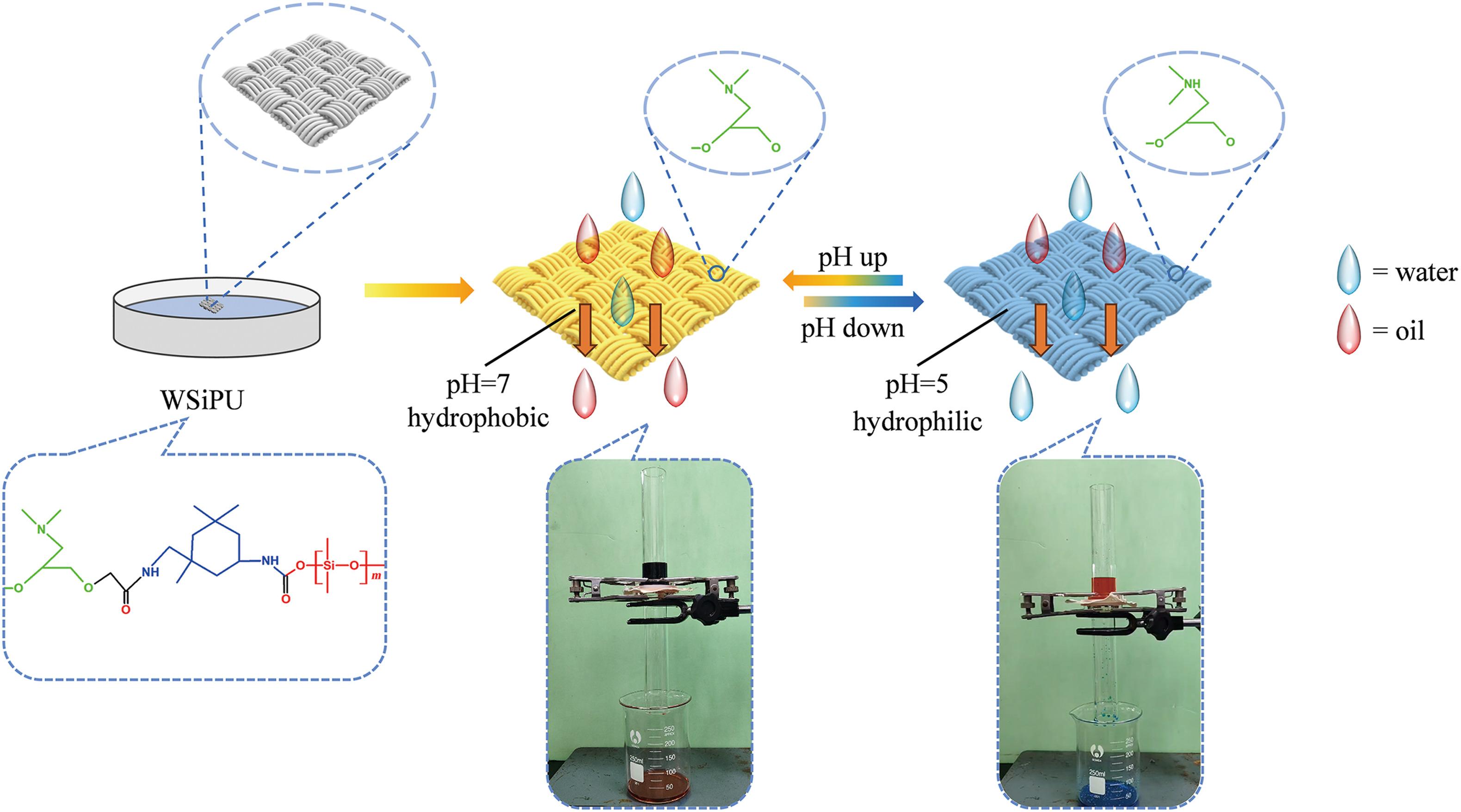
The development of separation technologies for oil-water mixtures with different specific gravities remains an urgent challenge. In this study, a smart pH-responsive fluorine-free polyurethane was prepared and applied to fabric via a simple dip-coating method. By utilizing its tunable surface charge under pH 5 and 7, the fabric enabled continuous separation of oil-water mixtures with varying specific gravities and faciliated the recovery of contaminated oil in spill incidents. Notably, the fabric demon-strated excellent oil-water separation efficiency (approximately 95%) and high flux (over 18000 L·m-2·h-1 for oil). Additionally, the material exhibits excellent antifouling and recyclability properties, along with notable chemical and mechanical stability. These attributes suggest that this coated fabric holds promise as an effective material for treating complex wastewater.